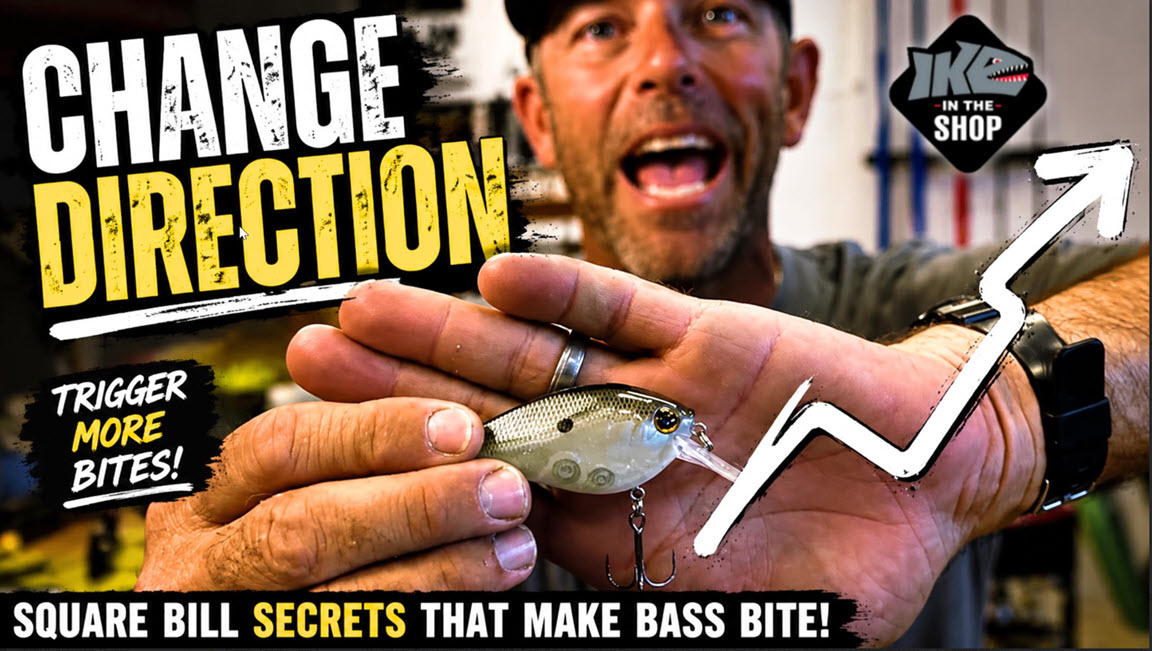
I want to talk about one of my favorite ways to cover water, fish shallow cover, and make bass bite even when they’re not hungry: square billing. This isn’t some brand-new technique. Square bill crankbaits have been catching fish forever. I remember growing up in the ’80s watching guys throw baits from companies like Bagley and Rebel with those short, squared-off bills, and they caught the heck out of them! What makes a square bill so special is its ability to create a reaction strike. On those perfect cloudy, windy days, bass might chase almost anything. But most of our fishing days aren’t perfect. We deal with sun, clear water, muddy water, fishing pressure, and bass that just don’t want to eat. That’s where the square bill shines. You can literally make that fish react by putting the bait in the right place and making it suddenly change direction.
It’s All About the Bill
The most important part of any square bill crankbait is right there in the name, the bill. A square bill has a short, angled lip that controls how deep the bait dives, but more importantly, it controls how the bait deflects.
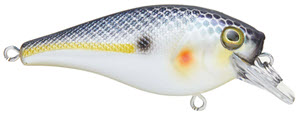
Most square bills are shallow-running crankbaits designed for water from just a couple feet deep down to about five or six feet. My choice is the Berkley Squarebull, and one thing I really like about this bait is its wider, broader lip. When that lip contacts a stump, rock, dock piling, log, gravel, or other piece of cover, the bait kicks away from it instead of just running straight. The Berkley Squarebull comes in three sizes, and each one has a place in my boat:
- 3.5: Great around small forage, after the spawn, in the fall, or during really tough conditions.
- 5.5: My workhorse size and the one I use most often.
- 7.5: Perfect around bigger forage, dirty water, deeper targets, or when I’m hunting bigger bass.
That wider square bill lip helps the bait dive, deflect, and even “hunt” a little as it tries to center itself after hitting something. That movement is exactly what we want!
Match the Hatch
Color selection for square billing doesn’t have to be complicated. My number-one rule is to match the hatch. Look at the forage in the water and choose something that resembles what those bass are eating.
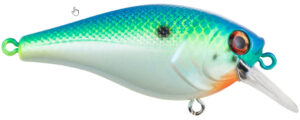
I basically organize my square bill colors into three groups.
- shad patterns—pearls, whites, natural shad colors, and translucent colors for clear water.
- chartreuse patterns, including chartreuse with black, brown, or blue backs. Those colors are awesome around bluegill and perch, and the brighter color really helps bass find the bait in stained or dirty water.
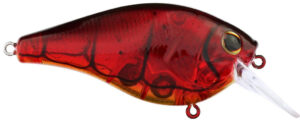
- crawfish colors—browns, reds, and oranges. These are especially deadly in the spring when bass are feeding around crawfish. Imagine that red or orange Square Bull crawling along, banging into a rock and suddenly shooting sideways, it looks alive!
Size, color, vibration, and sound all matter, but none of them work to their full potential unless you fish that bait correctly.
Hit Something on Every Cast!
Here’s the biggest secret I can give you about square billing: stop trying to keep your crankbait away from cover! I want that Berkley Squarebull hitting something on almost every cast. Cast past the stump. Crank the bait down. Let that square bill smack the stump,
pause for just a second, and start reeling again.
The bait hits, deflects, rises slightly, hunts, and then starts moving forward again. THAT is when the bite happens! You’re creating a sudden change of direction right in front of that bass. If there’s no stump, rock, dock, or other cover, try to makethe bait contact the bottom. And if you can’t hit anything at all, create the same action yourself:
- Change your retrieve from normal to fast, slow, and back to normal.
- Move your rod from center to high, low, and back again.
- Add little pauses and speed changes throughout the retrieve.
The worst thing you can do is cast a square bill out and simply wind it straight back to the boat. Make that bait hunt, deflect, stop, start, and change direction. Those changes trigger reaction strikes from bass that might otherwise completely ignore your lure.
The Right Rod, Reel and Line
Finally, your equipment matters, especially because square bills use treble hooks. I like a softer, more parabolic rod that loads up and absorbs the shock when a bass jumps or thrashes. My choice is an Abu Garcia Ike Series Delay Rod, a composite rod combining glass and graphite. For close-range square billing, I like a shorter 6’6″ to 7′ medium-action rod because it helps me make accurate casts around docks, stumps, pilings, and other shallow targets. Match it with a medium-speed reel around 6.8:1 to 7.4:1; my Abu Garcia Ike Series 7.1:1 reel is right in that sweet spot. For line, forget braid most of the time. I want some stretch. When I want the Square Bull to reach maximum depth, I use Berkley Trilene Fluorocarbon, generally 12- to 17-pound test, with 15-pound being my favorite all-around choice. When I want the bait to stay higher in one to three feet of water, I switch to old-school mono like Berkley Trilene Sensation. The big lesson is simple: square billing is about creating a reaction. Hit the cover, hit the bottom, change your speed, move your rod, and make that bait hunt. When a square bill suddenly changes direction next to a bass, that fish has a hard time letting it go by. Give these tricks a try the next time you hit the water, and I promise you’re going to put more bass in the boat!
____________________________________________________________________________
Follow Ike on Facebook, Instagram, X and TikTok for fishing and fun content. Subscribe to Mike’s YouTube channel for access to his educational ‘Ike in the Shop’ videos and his ‘Going Ike’ Adventure series!