I’m going to share with you a technique that flat-out catches fish when the water is cold! When most anglers think about a blade bait, they think deep water like 10, 20, even 40 feet down in the winter, and that absolutely works. But here’s something a lot of people overlook: that same metal blade bait can be just as deadly in shallow water when the water is cold. I’m talking 10 feet or less, and many times only 2 to 5 feet.
The biggest reason this works so well is pressure. Almost nobody is throwing a blade bait shallow. Even on lakes, rivers, and reservoirs that get hammered, this is a technique bass don’t see much. That makes it a huge advantage when other cold-water patterns slow down.
Picking the Right Blade Bait
Let’s start with the bait itself. Blade baits are pretty simple, fish-shaped metal lures with holes in the back for your snap or swivel. If you’re old-school like me, you remember the original Silver Buddy. Today, there are a lot of newer, more realistic, better-balanced blade baits on the market.
The blade bait I’ve been using for shallow water fishing is the Molix Trago Vibe, but honestly, the brand isn’t the most important part. What really matters is weight and hook style.
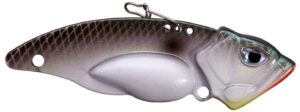
For shallow water, I want lighter blade baits. Most anglers think half-ounce when they think blade bait, but that’s for deep water. Shallow water blade baiting is a different deal. I stick with a 1/4-ounce or 3/16-ounce. Those lighter baits fall slower, wander more on the drop, and don’t dig into the bottom. That wandering fall is a huge trigger in cold water.
Hook configuration is also critical. A lot of traditional blade baits come with treble hooks, which are fine in open water. But shallow water usually means cover like wood, rocks, dock pilings, weeds, and all kinds of junk. That’s why I really prefer blade baits with double-prong frog-style hooks, like the ones on the Molix Trago Vibe. They slide through cover way better and snag far less.
When it comes to color, keep it simple. Silver, pearl, and gold will cover most baitfish situations. Perch and bluegill patterns are great when those are present, and in cold water, I always like to have a few red blade baits tied on as well.
The Ideal Rod, Reel, and Line Setup
This setup is extremely important for shallow blade baiting. Small changes here make a big difference in how the bait moves.
This is a spinning-rod technique, and I prefer a shorter rod, somewhere between 6 and 7 feet, medium-heavy power. My absolute favorite is the 6’6” Medium-Heavy Abu Garcia Ike Series spinning rod. A shorter rod keeps your hops smaller and slower. A longer rod lifts the bait too high and too fast, which is exactly what you don’t want in cold, shallow water.
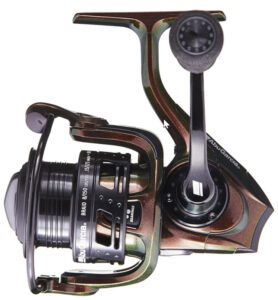
For the reel, a 3000-size Abu Garcia Ike Series spinning reel is perfect. You don’t need an ultra-high-speed reel—just a solid, middle-of-the-road gear ratio that lets you stay controlled.
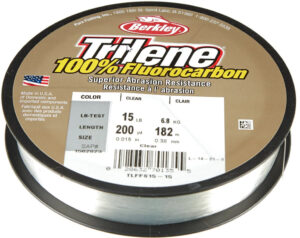
Line choice matters too. I like a 15-pound braid as my main line with a short fluorocarbon leader, usually about two feet or less of 12- to 15-pound Berkley Trilene Fluorocarbon. That heavier setup gives the bait a little lift, helps it vibrate properly, and gives you strength when you hook a big one around cover.
Where to Fish It in Cold Water
Even though we’re fishing shallow, bass in cold water still want something nearby. They’re rarely on dead-flat banks. Instead, I’m looking for shallow water with a little angle or a break close by.
Great places to fish a shallow blade bait include dock pilings, seawalls, riprap, bridge pilings, rocks, wood, and isolated cover. Basically, anything you can see with your eyes or identify with your electronics. Shallow water plus cover is the key.
How to Work the Bait to Get Bit
The retrieve is simple, but you have to be disciplined. Shallow blade baiting is all about small hops. Cast past your target, let the bait hit bottom, then lift the rod from about three o’clock up to one or two o’clock. Let it fall back down on slack and repeat.
Most bites happen on the fall or right when you go to lift again. If fish aren’t committing, I’ll mix in two small changes. First, every five or six hops, I’ll make one bigger lift. That sudden change often triggers a following fish. Second, I’ll occasionally let the bait sit on the bottom for a few seconds. That dead-stick pause looks like an easy meal, and bass will suck it right off the bottom.
If you’re a blade bait guy but only fish them deep, you owe it to yourself to try this shallow-water approach. Cold water, shallow cover, little hops and a Silver Buddy style blade bait or a Molix Trago Vibe, it’s a killer combo that gets overlooked and flat-out catches fish.

Follow Ike on Facebook, Instagram, X and TikTok for fishing and fun content. Subscribe to Mike’s YouTube channel for access to his educational ‘Ike in the Shop’ videos and his ‘Going Ike’ Adventure series!