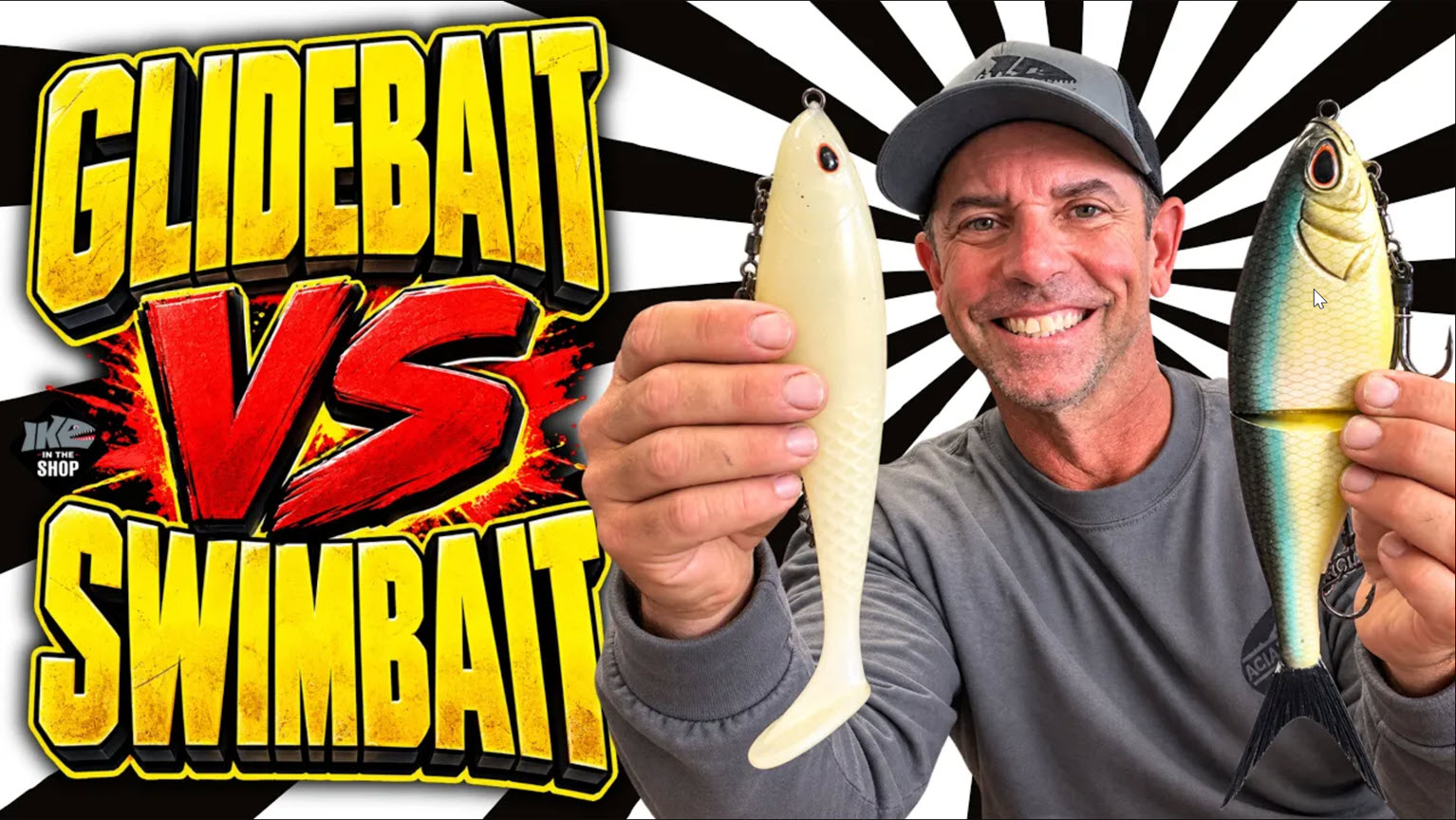
Today, we’re going head-to-head with two of my favorite big bass baits: the glide bait and the full-bodied boot tail swimbait! If you’ve followed me for any length of time, you know I’m a huge believer in the big bait, big bass theory. Bigger bass want bigger meals, and these oversized swimbaits are perfect for triggering those giant fish. Both styles have incredible drawing power, meaning they can attract bass from a long distance, even when those fish aren’t ready to bite. But here’s the deal, guys. These two baits aren’t the same, and knowing when to throw each one can make a HUGE difference in your fishing success! I’m comparing the Berkley Chop Block, a single-jointed glide bait, against the Berkley CullShad, a full-bodied boot tail swimbait. We’re breaking this battle down into three important categories: water clarity, water temperature, and type of cover. Let’s get into it!
Water Clarity
Water clarity is one of the biggest factors when choosing between these two baits. When I’m fish

ing clear water, where I can see two or three feet down or more, my clear winner is the Berkley Chop Block glide bait! Even in slightly stained water with about a foot of visibility, I’m reaching for that glide. Why? It’s all about that wide, sweeping S-shaped swimming action.
The Berkley Chop Block moves naturally from side to side, looking like a big baitfish swimming through the water. In clear water, bass can see that movement from a long distance. Whether they’re feeding on gizzard shad, bluegill, cisco, or other large forage, that glide action gets their attention. But when the water turns muddy or heavily stained, everything changes! That’s when I switch to the Berkley Cull Shad Its oversized boot tail creates tremendous vibration, while the body rolls from side to side. The Berkley CullShad also features a honeycomb body design that allows the tail to swing freely, creating even more thump. Bass can detect that vibration in dirty water, making this bait easier to find.
My water clarity rule:
- Clear to slightly stained water: Berkley Chop Block glide bait.
- Heavily stained to muddy water: Berkley CullShad boot tail swimbait.
Water Temperature
Water temperature changes everything about how bass behave! When water temperatures drop to 60 degrees or below, bass generally become less aggressive. They aren’t always willing to chase a fast-moving bait, and that’s where the Berkley Chop Block really shines. This glide bait has a slow-sinking design, allowing me to work it extremely slowly. I can reel it, give it a couple of short chops, pause it, and keep it hanging near a fish. Think about fishing a suspending jerkbait in cold water. Twitch, twitch, pause! That same approach works with a glide bait.
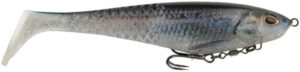
Sometimes that long pause is exactly what triggers a giant bass to strike. But once temperatures climb into the mid-60s, 70s, and beyond, I’m reaching for the Berkley CullShad. Warmer water usually means more active bass that are willing to chase baitfish. The Berkley CullShad’s big paddle tail and rolling body create constant movement during a steady retrieve. I can speed it up, cover water, and match the aggressive feeding behavior of summertime bass. It’s an incredible big fish bait!
Type of Cover
The final category is something anglers often overlook: the type of cover you’re fishing. Are you targeting one isolated stump, a single dock, or a lone boulder? Or are you fishing a mile-long grass line, endless docks, or a huge field of standing timber? For isolated targets, my winner is the Berkley Chop Block. I can make that bait glide left, glide right, pause, and even turn around near one piece of cover. That keeps it in the strike zone longer and gives a big bass extra time to commit. But when I’m fishing large stretches of cover, the Berkley CullShad gets the nod! I can cast, reel, and cover tremendous amounts of water while still presenting a large profile that attracts trophy bass. That steady retrieve helps me locate fish spread across grass edges, rock banks, and timber fields. Remember, guys, the longer you can keep the right bait in front of active fish, the better your chances of getting bit!
The Final Verdict: Let the Conditions Decide!
Here’s the bottom line, both the Berkley Chop Block and Berkley CullShad are outstanding big bass baits, but each has situations where it really shines. The glide bait wins in clear water, colder temperatures, and around isolated targets. The boot tail swimbait wins in dirty water, warmer temperatures, and when you need to cover large areas. Don’t get locked into throwing just one style! Carry both, pay attention to the conditions, and let the fish tell you what they want.
Follow Ike on Facebook, Instagram, X and TikTok for fishing and fun content. Subscribe to Mike’s YouTube channel for access to his educational ‘Ike in the Shop’ videos and his ‘Going Ike’ Adventure series!