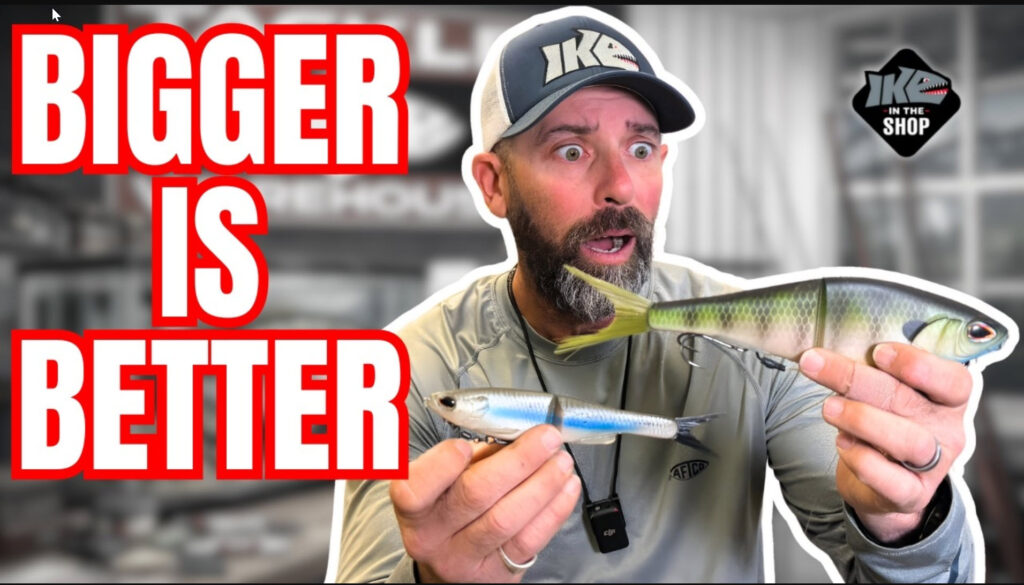
I’m back with a topic that gets a lot of anglers fired up, and honestly, a little intimidated too. We’re talking BIG glide baits. Not your 5-inch, 6-inch, even 8-inch swimbaits. I’m talking magnum stuff…10 to 12 inches. Yeah, those giant baits that make you stop and say, “Man, that thing’s huge!” But here’s the deal, guys, there are times when that oversized glide bait will absolutely outfish the smaller ones. Not a little bit. I’m talking visibly, noticeably better. So don’t let the size scare you. Let’s break down when and why you want to go big.
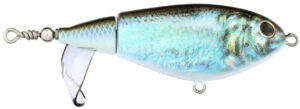
First thing we’ve got to talk about is the foundation of everything I believe in when it comes to bait selection is match the hatch. If you’re fishing a body of water that has big forage, you need to match not just the color, but the size too. That’s where a bait like the Berkley PowerBait Choppo or better yet, the 10-inch Berkley PowerBait Chop Block comes into play. When the food source is big, your bait should be big.
Think about it, a Gizzard Shad that grow 10–12 inches, Hitch out west that get giant, Bunker in brackish or saltwater, Golden shiners and Tilapia, big panfish like bluegill, perch, and rock bass. If that’s what bass are eating, why throw something small?
That big glide bait becomes a perfect mimic. It looks real, it moves real, and it gets bit like the real thing. Matching the hatch isn’t just about color anymore, it’s about profile and presence.
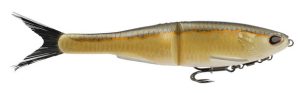
Now let’s talk about reason number two, targeting the biggest fish in the lake. If you’re just looking to get bites, a smaller bait like a Berkley PowerBait Nessie will get you numbers. No doubt about it.
But if you’re hunting giants, you’ve got to think like a giant. Big fish want big meals. It’s a simple energy equation. Why would a 6-pound bass chase five little shad when it can eat one big one and get the same or more nutrition? Big bait = bigger meal, bigger meal = more energy, more energy = less effort for the fish!
So when you throw a 10 or 12-inch glide bait, you’re weeding out the little guys and dialing in on the biggest fish in the system. That’s how you catch a personal best. That’s how you catch a fish of a lifetime.
Now here’s the one I really want you to lock in on-drawing power. This is what makes big glide baits special. These baits don’t just catch fish, they call fish. There is something about that big profile, that slow “S” movement, that triggers curiosity in bass. It’s like a cat seeing something move across the room, they can’t help but go check it out!
And here’s the crazy part… this works even in tough conditions:
- Cold fronts
- Heavy fishing pressure
- Clear water
- Dirty water
- Bluebird skies
When finesse baits struggle, a big glide bait can actually shine. It pulls fish out of cover. It makes them follow. It makes them react. Even if the forage is small, that big bait still draws attention. It cuts through the clutter and gets noticed.
Now let’s talk about action and how to fish it, because this is where the magic happens. These big glide baits have a natural “S” motion, and the bigger they are, the better they move. More surface area means more fluid action. You can fish them a couple key ways:
- Slow steady retrieve: Let the bait naturally glide side to side
- Chop retrieve: Twitch, reel slack, twitch, reel slack
- Turn and burn (180s): Add slack to make the bait turn and face the fish
That chopping action is deadly. The bait stays in place longer, especially around cover like stumps or docks. It hovers, it teases, and it gives that bass time to commit. And when you hit it and throw slack? That bait turns and looks right at the fish—boom—that’s your trigger.
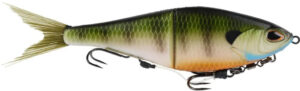
A couple quick mods can make these baits even better. Because the Berkley Chop Block is soft plastic, you can customize it on the fly by adding chartreuse or red with a Spike-It (or similar) pen, drawing a shad dot or gill mark and inserting nail weights to get deeper
And don’t forget the gear—you need the right setup:
- Rod: 7’6” to 8’ heavy
- Reel: 6.8:1 to 7:1 gear ratio, oversized handle
- Line: 20–30 lb Berkley Trilene 100% Fluorocarbon (or mono to keep it higher)
At the end of the day, guys, don’t be intimidated by these big glide baits. I know they look massive. I know they feel different. But in the right situations like big forage, targeting giants, or when you need that drawing power, they flat out work. If you want to catch the biggest bass in your lake, you’ve got to throw a bait that gives you a shot at that fish. And a 10 to 12-inch glide bait does exactly that.
Give it a try. Step outside your comfort zone. I promise you, when that giant rolls on it, you’ll never look at big baits the same way again.
___________________________________________________________________________
When Bigger Is Better: Glide Bait Strategy for Big Bass
Follow Ike on Facebook, Instagram, X and TikTok for fishing and fun content. Subscribe to Mike’s YouTube channel for access to his educational ‘Ike in the Shop’ videos and his ‘Going Ike’ Adventure series!